


Print Finishing That Sells: When Foil, Emboss and Spot UV Are Worth the Investment
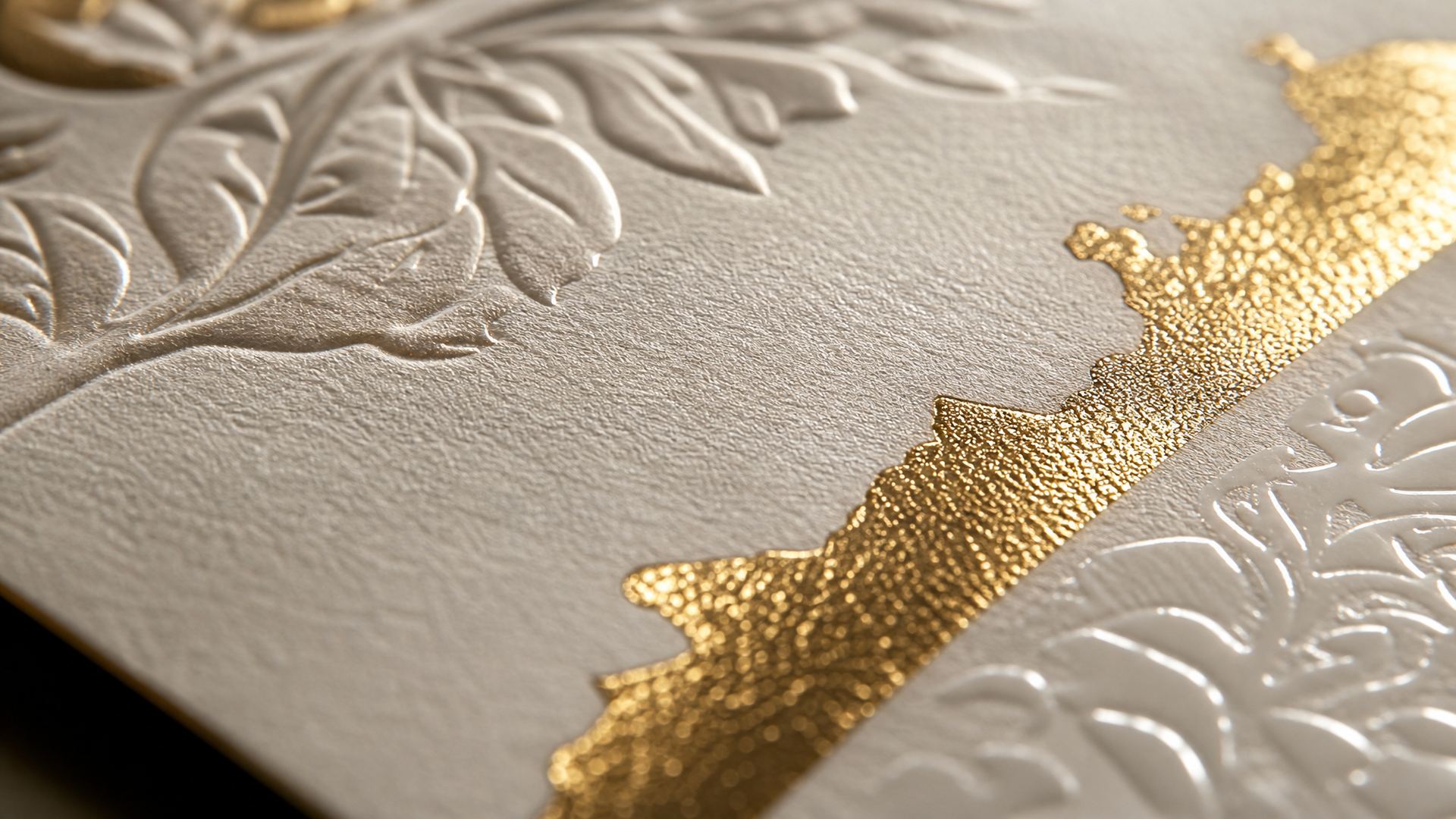
The difference between a printed piece that feels premium and a printed piece that feels ordinary is almost never the design. Two pieces can carry the same layout, same colours, same typography, same imagery, and one will feel worth ten times what the other feels worth.
The difference is the finishing.
Foil. Emboss. Spot UV. Deep die cut. Laser cut. Specialty coatings. These are the techniques that move a printed piece from communicating a message to being an object worth holding onto. Used well, they lift response rates, protect brand equity and justify their production cost several times over. Used poorly, they add cost without commercial return.
Here is what each of the major finishing techniques actually does, when it is worth the investment, and what makes finishing programs succeed.
The finishing techniques worth knowing
Foil stamping. Metallic or pigmented foil applied to specific areas of the printed piece using a heated die. Creates high-contrast reflective or coloured areas that catch light differently from the surrounding print. Available in gold, silver, copper, holographic and coloured foils. Works best on solid shapes, logos, typography where the metallic quality reads as premium.
Emboss and deboss. Physical deformation of the substrate to raise or lower specific areas. Creates a tactile dimension that changes how the piece feels in hand. Emboss can be applied blind, in register with printed elements, or combined with foil. Deboss creates the reverse effect with a subtler visual impression.
Spot UV. A clear coating applied to specific areas of the printed piece, cured under UV light. Creates a high-gloss contrast against surrounding matte areas. Highlights logos, imagery, typography or pattern without adding colour. Almost invisible from directly overhead. Reveals itself as the piece is tilted.
Die cutting. Custom shape cutting of the printed piece using a die. Removes the constraint of standard rectangular formats and enables creative silhouettes, windows, folds and structural design.
Laser cutting. Precision cutting using laser rather than die. Enables finer detail than die cutting and produces cleaner edges on some substrates. Higher cost, higher precision.
Specialty coatings. Soft touch coatings that change the tactile quality of the surface. Textured varnishes. Anti-fingerprint coatings. Each changes the character of the piece without changing the print.
When finishing is worth the investment
Three categories consistently justify finishing spend.
High-value acquisition and retention mail. Financial services, premium subscription boxes, luxury retail, membership programs. When the acquired or retained customer is worth thousands of dollars in lifetime value, the incremental production cost of finishing is easy to justify.
Packaging that sells at retail. Consumer packaging on shelf competes with dozens of adjacent packages. Foil, emboss and spot UV consistently lift shelf impact and can justify a price premium.
Corporate communications with reputational weight. Annual reports, board packs, investor communications. Finishing signals that the communication has been taken seriously.
Any piece where the physical impression is the marketing. Wedding invitations, luxury event invitations, high-end retail activations. The finishing is the message.
When finishing wastes money
Two failure patterns show up.
Applied to everything, therefore signalling nothing. Foil on every element of every page removes the contrast that made foil valuable in the first place. Finishing works through selectivity.
Applied without regard to the printed element. Spot UV on a poorly designed image adds nothing. Emboss on typography that is too fine breaks the emboss. Finishing techniques amplify what is already there. They do not fix design that is not working.
What good finishing looks like operationally
Three disciplines separate the finishing jobs that come off the line looking premium from the ones that come off looking rough.
Registration. Finishing elements must sit precisely where the print elements are. Foil out of register looks worse than no foil at all. This is a production capability question.
Substrate selection. Not every stock takes every finish. Emboss on the wrong stock crushes flat. Foil on the wrong coating flakes. Finishing decisions and substrate decisions are the same decision.
Sequencing. The order in which print, foil, emboss, coating and die cut are applied changes the outcome. A well-run finishing operation designs the sequencing at the point of proof, not the point of production.
Consolidation matters here
Finishing programs go wrong most often at the handoffs between vendors. Printer to foil vendor to emboss vendor to die cutter. Every handoff introduces registration risk, timing risk and finger-pointing risk when something does not align.
Finishing under one roof with print production eliminates most of that risk. Registration is controlled through the whole run. Sequencing is planned by one team. If something goes wrong, one team is accountable.
The takeaway
Print finishing is one of the most powerful tools in commercial print and one of the most under-considered. Used selectively, it justifies its cost multiple times over. Applied indiscriminately, it wastes budget and dilutes brand impression.
Reacon runs foil, emboss, spot UV, die cut and specialty coating in-house alongside print production. Registration and sequencing controlled through one operation. Certified to ISO 9001.