


Retail Activations at Scale: The Logistics Behind National Rollouts
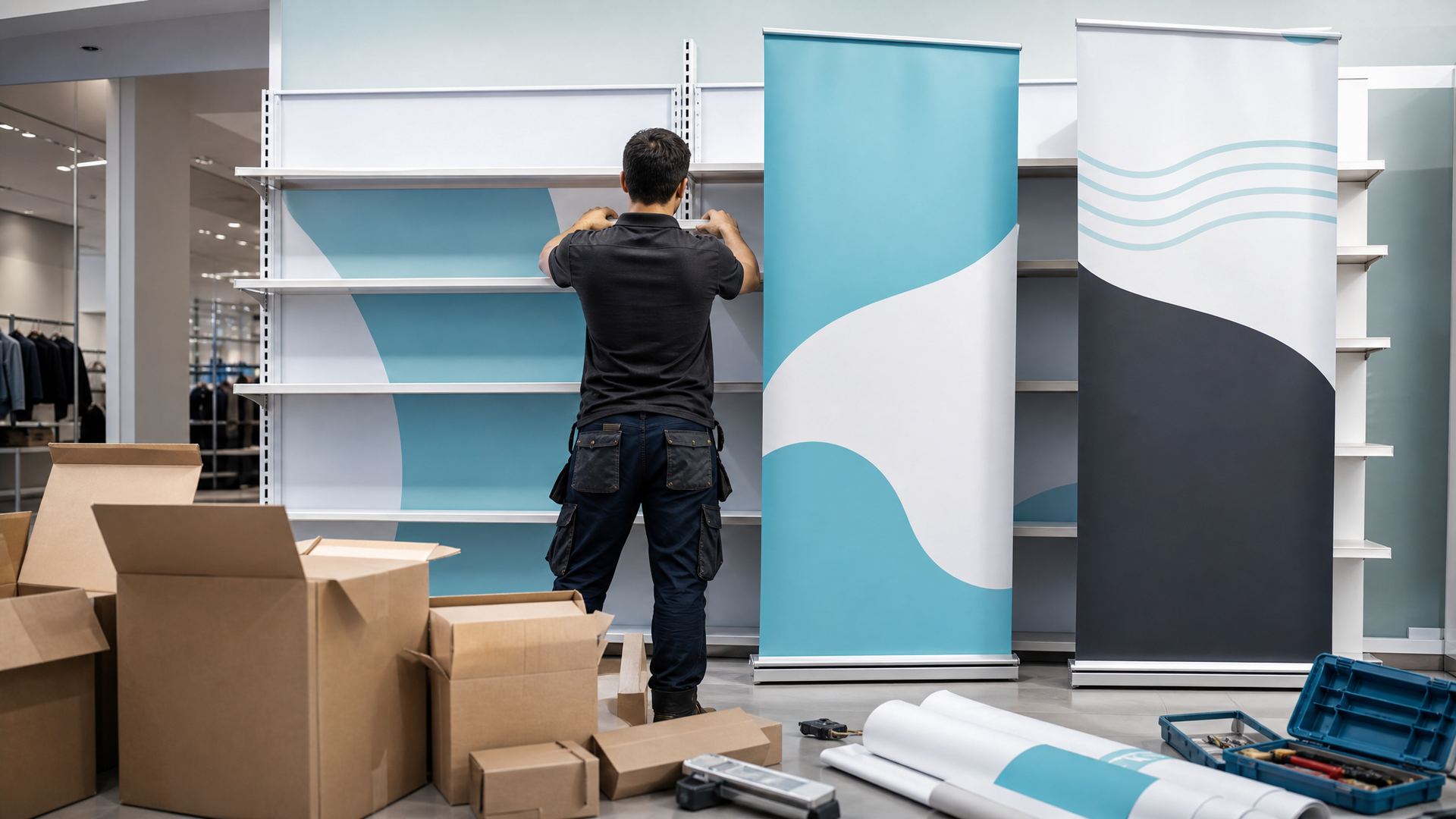
Every retail activation looks the same from the outside. A branded environment. A product experience. A moment designed to create engagement in a physical space.
Every retail activation is completely different on the inside. Fixing sequences, delivery windows, installation crews, freight coordination, inventory holding, replacement stock, teardown logistics. The creative gets the credit. The logistics decides whether the program actually executes.
Here is what a national retail activation looks like operationally, why the logistics side dominates the success rate, and where programs typically go wrong.
What a national activation actually involves
A single national retail activation rollout across a few hundred sites involves an operational chain longer than most marketing teams realise.
Design and structural engineering. The physical elements need to be designed for real-world manufacturing, real-world installation and real-world removal. What looks good in the concept render often does not survive contact with a retail floor.
Manufacturing across multiple substrates. A single activation piece might combine printed panels, fabricated structure, adhesive floor decals, digital signage, illuminated elements and freestanding units. Each substrate has its own production pipeline.
Quality control at scale. A batch of a hundred is easy to inspect. A batch of a thousand is not. Statistical sampling, first-off inspection and in-line quality control determine whether the last unit off the line looks the same as the first.
Kitting and pre-configuration. Each site typically receives a custom kit tailored to its floor plan, its stock, its sightlines. Kitting the components correctly for each site is a genuine operational challenge.
Freight and logistics. Distribution to hundreds of sites nationally, often to defined installation windows, often outside standard delivery hours.
Installation coordination. Crews on site, tools on site, permits in place, retail operations aware, adjacent stock protected during install.
Teardown and reverse logistics. Every activation ends. The teardown is often more expensive than anyone budgeted, especially when the environment is not designed for it.
Where activations typically go wrong
Three failure patterns show up repeatedly.
Design that ignores manufacturing constraints. The creative team designs an activation without input from the production team. Manufacturing lead times force compromises at production. The activation that installs is a diluted version of the concept.
Freight windows miscalculated. National distribution across hundreds of sites requires realistic freight scheduling. Under-buffering here means missed installation windows. Over-buffering means increased freight cost.
Installation coordination underdone. Crews turn up to sites with missing components, wrong specifications or blocked access. Every incident like this cascades through the schedule.
Season launch discipline slipping. A retail activation tied to a season launch has a hard date. Every operational element compresses back from that date. The margin for error is usually thinner than the plan suggests.
What good operational execution looks like
The strongest retail activation programs share three characteristics.
Production is briefed alongside creative. The manufacturing team sees the concept before the concept is locked, and can flag where the creative will run into production constraints. This is a small investment that saves large amounts of rework.
Kitting and freight are treated as design problems. Each site's kit is designed as a specific deliverable, not as a generic parcel. Freight routes are planned around installation windows rather than the reverse.
Contingency is built into every leg. Every retail activation encounters something unexpected. Programs that build contingency at every stage absorb the unexpected. Programs that do not run out of margin at the last stage.
The consolidation advantage
Retail activations that split across multiple suppliers hit coordination overhead at every handoff. Design vendor to production vendor to logistics vendor to installation crew. Each handoff is a potential failure point.
Activations produced under one operational roof, with in-house design, manufacturing, kitting, freight coordination and installation partnerships, dramatically reduce the coordination surface. When something goes wrong, one team owns the resolution rather than pointing at the next vendor.
The takeaway
National retail activations are logistics programs with creative on top. The logistics side of the program is where success is actually decided. Consolidated production, kitting and coordination remove the failure points that cause most activation programs to underperform.
Reacon operates retail activation production, kitting and coordination under one accredited operation, including signage, digital displays, floor decals, structural elements and installation partnerships. Certified to ISO 9001.