


Variable Data Printing: How Personalisation at Scale Actually Works
Personalisation is the most overused word in marketing. It usually means substituting a first name into an email subject line and calling it a day. Variable data printing does something much closer to what the word actually implies.
At scale, on a printed piece, every element can vary from one recipient to the next. Text, imagery, offer, formatting, colour, layout. What arrives on the doormat is genuinely different for every recipient, driven by data.
Done well, that changes what a printed piece can do commercially. Done poorly, it makes a printed piece feel worse than an un-personalised version. The difference is not the technology. The technology has been mature for years. The difference is the data and the execution.
Here is how variable data printing actually works, where it is delivering commercial results in Australia, and what makes campaigns underperform.
What variable data printing is
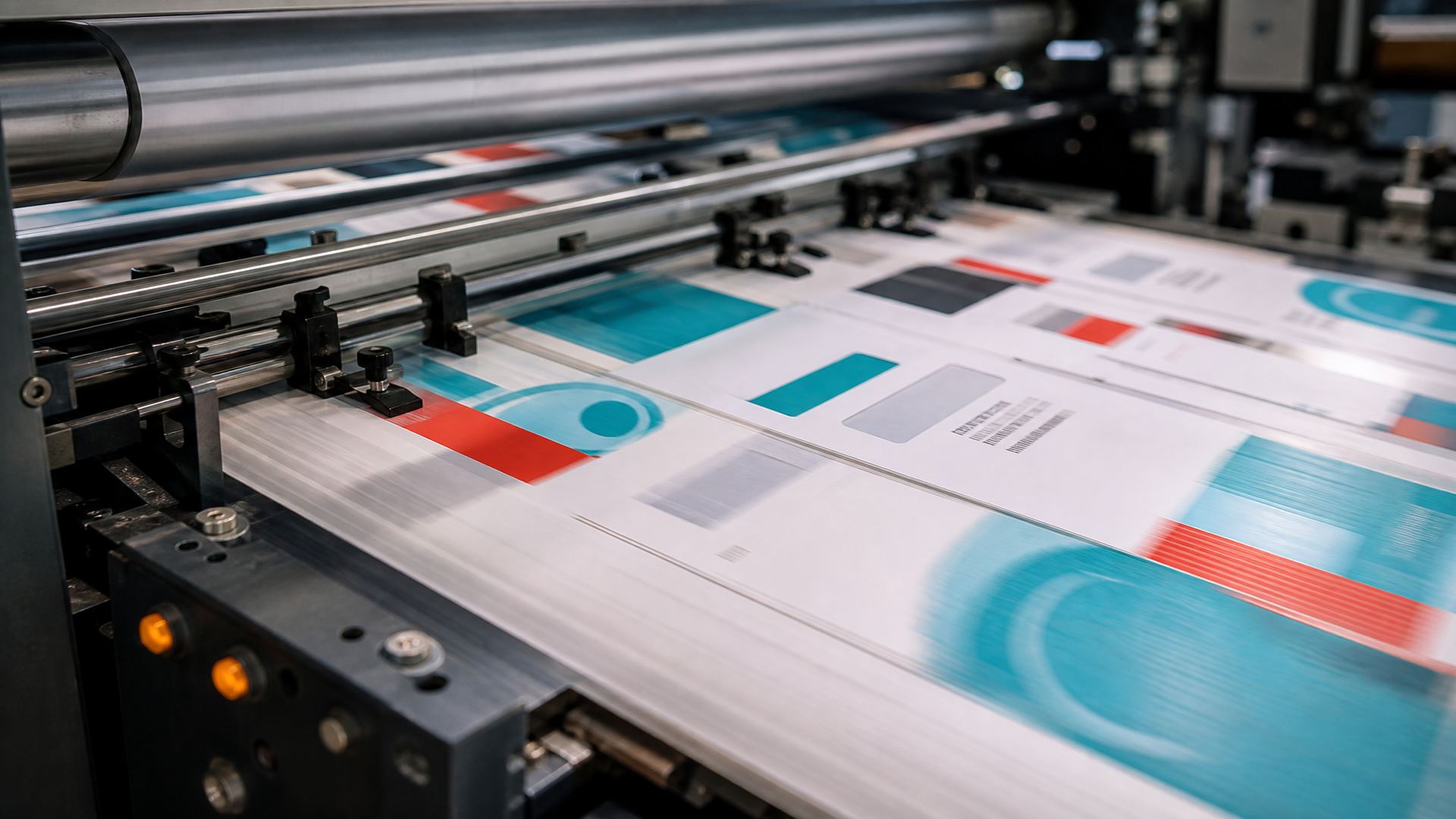
Variable data printing, or VDP, is a print production capability that allows content on a printed piece to vary between individual copies, driven by a data file. Rather than printing 100,000 identical pieces, a VDP press prints 100,000 individually customised pieces at the same speed.
The technology sits primarily in digital press hardware. The data logic sits in the workflow that connects the customer data source to the press.
For a marketer, the practical implication is that every piece can carry a different name, address, offer, image, product recommendation, greeting or call to action.
Where VDP delivers commercially
Three categories consistently show meaningful uplift from VDP execution.
Retention direct mail. Personalised retention pieces built on individual customer history outperform generic retention pieces across almost every financial services and subscription category. The uplift is not marginal.
Acquisition with segmentation. VDP allows acquisition campaigns to run multiple offer variants against the same creative shell, with each recipient seeing the variant most relevant to their profile. This looks like one campaign in execution and multiple campaigns in performance.
Charity donor engagement. Personalised donor communications, particularly those that reference specific past giving or specific programs, consistently outperform generic donor mail in Australian fundraising.
Where VDP campaigns underperform
The technology is mature. When VDP campaigns underperform, it is almost always for one of three reasons.
Poor data. Personalisation feels off. Names are misspelt. Product recommendations are wrong. The recipient can tell. A campaign that gets personalisation wrong performs worse than a campaign that does not attempt personalisation at all.
Superficial personalisation. The only variable element is the recipient's first name. There is no logic behind the offer, no reference to history, no reason for the recipient to feel this piece was written for them. The technology is being used but the value is not.
Wrong data source. The customer data being used to drive personalisation is stale, incomplete or drawn from a system that does not reflect the customer's current relationship with the brand.
In every case, the fix is upstream of the print production. Data quality, personalisation logic and integration with the source system are the levers that make VDP campaigns work.
What good VDP execution looks like
Three operational disciplines separate the campaigns that deliver from the ones that do not.
Data hygiene before send. Cleansing, de-duplication and validation before the file enters the print environment. Every error caught before production is an error the recipient never sees.
Personalisation logic. A defined ruleset that determines which variable elements appear for which recipients, tested end to end with sample runs before the full send.
Integrated measurement. Match-back, response codes and clean control cells that let the campaign learn from itself and improve on the next round.
The infrastructure that makes it work
VDP requires digital press capability, a personalisation workflow, a data ingestion pipeline and quality assurance across all of it. The strongest mailhouse operations combine those under one roof so that the data, the personalisation and the production are managed as a single operation.
Reacon runs VDP campaigns across financial services, subscription commerce, charities and retail. Certified to ISO 9001, ISO 27001 and PCI DSS, with Australia Post Data Partner status, and integrated with our mailhouse and Data-Driven Innovation team for end-to-end delivery.